

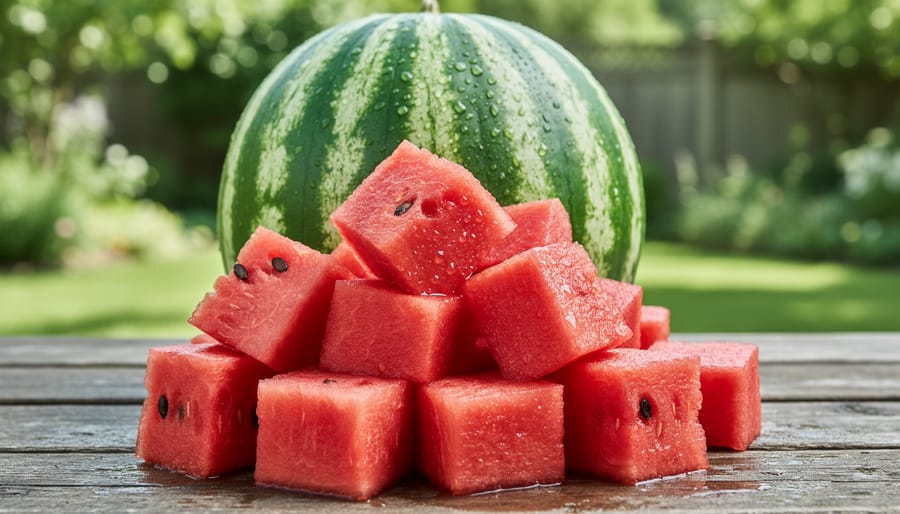
# Is Watermelon Healthy? Here’s What Science Says
Yes, watermelon is healthy. This summer favorite delivers serious nutritional benefits while keeping calories remarkably low.
A two-cup serving contains just 80 calories but packs 25% of your daily vitamin C needs and 8% of potassium. You’re also getting lycopene, the same antioxidant that makes tomatoes a superfood, which research links to heart health and reduced inflammation. The 92% water content makes watermelon one of nature’s best hydration foods, perfect for hot days when plain water feels boring.
The sugar concern? Understandable but overblown. While watermelon tastes sweet, that same two-cup serving has about 18 grams of natural sugar, comparable to an apple. The difference is watermelon’s high water content means you’re getting fewer grams of sugar per bite than most fruits. Its glycemic load (the measure that actually matters for blood sugar) sits in the low-to-moderate range.
Think of watermelon as functional food. You’re hydrating while getting vitamins, minerals, and beneficial plant compounds. Athletes use it to support recovery. Kids love it as a gateway to eating more produce. The only people who need caution are those managing specific medical conditions requiring strict fruit limitations.
The real question isn’t whether watermelon is healthy. It’s why you wouldn’t include this refreshing, nutrient-dense fruit in your regular rotation.
The Nutritional Profile: What’s Actually Inside Watermelon
Understanding whether watermelon is healthy starts with examining what you’re actually consuming. A two-cup serving of diced watermelon (about 300 grams) delivers surprisingly robust nutrition while clocking in at just 90 calories.
The standout feature is water content. At 92% water by weight, watermelon provides hydration alongside nutrients, making it uniquely valuable during summer months when fluid needs increase. This isn’t just empty water, either. The remaining 8% packs vitamins, minerals, and powerful plant compounds.
Here’s what you’ll find in that two-cup serving:
| Nutrient | Amount | % Daily Value |
|---|---|---|
| Water | 276g | |
| Vitamin C | 30mg | 33% |
| Vitamin A | 865 IU | 17% |
| Potassium | 320mg | 9% |
| Lycopene | 12-13mg | |
| Citrulline | ~250mg |
Lycopene deserves special attention. This red pigment antioxidant appears in higher concentrations in watermelon than in tomatoes. Your body absorbs it efficiently from watermelon’s soft tissue, and research links lycopene intake to cardiovascular health and reduced inflammation.
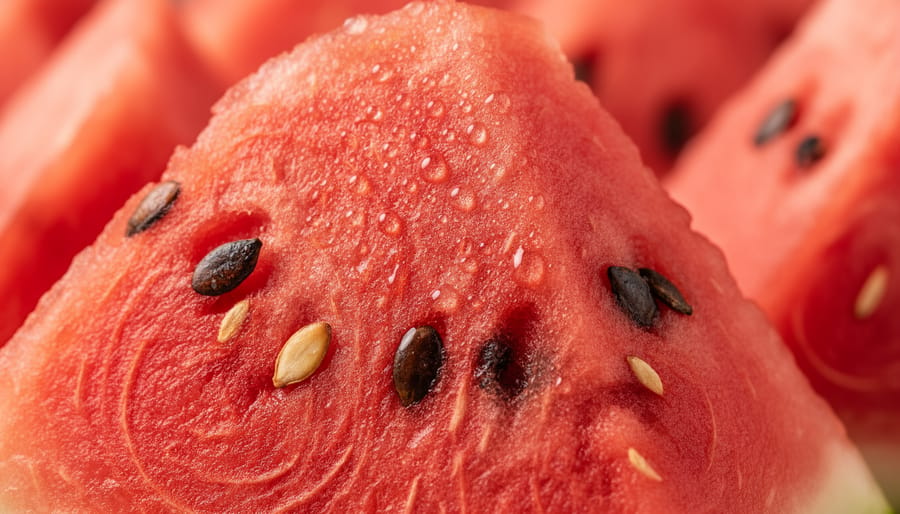
Citrulline, an amino acid concentrated in watermelon’s white rind but present throughout the flesh, converts to arginine in your body. This conversion supports blood vessel function and may improve exercise performance.
You’ll also get smaller amounts of B vitamins, magnesium, and copper. The combination of nutrients, rather than any single compound, contributes to watermelon’s health benefits.
Why Watermelon Is Your Best Friend for Summer Hydration
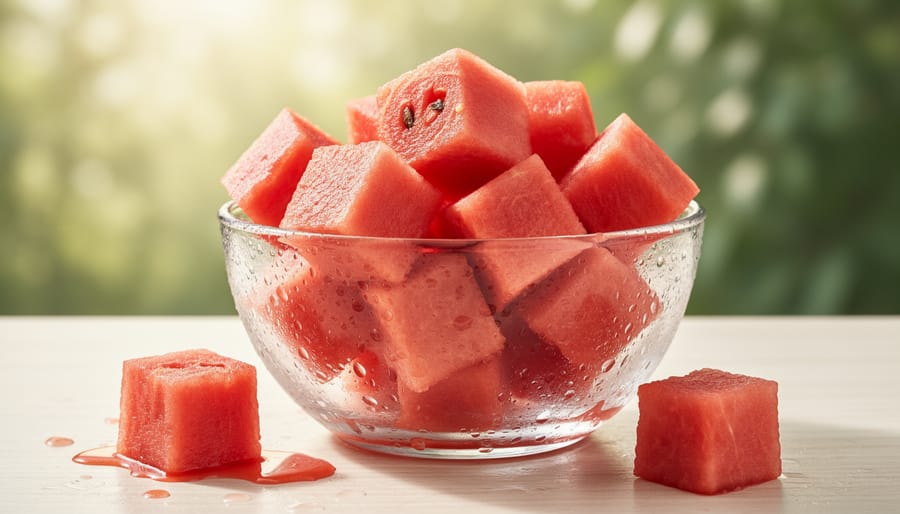
When temperatures climb, staying hydrated becomes critical, and watermelon delivers a refreshing edge over plain water. Watermelon is 92% watermaking it one of the most hydrating foods you can eat. That high water content means a two-cup serving provides about 10 ounces of fluid while also delivering electrolytes like potassium and magnesium that plain water lacks.
These electrolytes matter during summer activities because you lose them through sweat. While watermelon won’t replace a sports drink after intense exercise, it supports hydration during moderate activity like gardening, beach walks, or outdoor barbecues. The natural sugars provide a gentle energy boost without the artificial additives found in many commercial hydration products.
Think about those afternoon slumps on hot days. Reaching for watermelon instead of another glass of water makes hydration more appealing and helps you actually consume the fluids your body needs. Kids often resist drinking enough water but happily devour watermelon slices, making it a practical hydration tool for families spending time outdoors.
The combination of water, electrolytes, and carbohydrates also aids nutrient absorption. Your body processes the fluid from watermelon slightly differently than plain water, potentially extending the hydration benefit. For anyone struggling to meet their daily fluid needs, especially during summer heat, watermelon offers a nutritious solution that doesn’t feel like a chore.
Evidence-Based Health Benefits That Go Beyond Hydration
Heart Health and Blood Pressure Support
Watermelon contains about 250 milligrams of citrulline per cup, an amino acid that your body converts into another amino acid called arginine. Here’s why that matters: arginine helps produce nitric oxide, a compound that relaxes and widens blood vessels, allowing blood to flow more easily and reducing the pressure on arterial walls.
Several studies have documented this effect. Research published in the American Journal of Hypertension found that watermelon extract significantly lowered blood pressure in obese adults with early hypertension, particularly during cold stress conditions. Another study showed that six weeks of watermelon supplementation reduced ankle blood pressure and improved arterial function in middle-aged adults with prehypertension.
The beauty of getting citrulline from watermelon rather than supplements is that you’re also getting hydration, vitamins, and antioxidants in the same package. While watermelon isn’t a replacement for blood pressure medication if you need it, regularly including it in your diet may offer gentle cardiovascular support as part of an overall heart-healthy eating pattern.
Antioxidant Protection and Inflammation
Watermelon’s deep red flesh gets its color from lycopene, one of nature’s most potent antioxidants. A cup and a half of watermelon delivers about 9-13 milligrams of lycopene, rivaling tomatoes as a dietary source. This powerful compound helps neutralize free radicals that damage cells and contribute to chronic disease.
Beyond lycopene, watermelon provides roughly 25% of your daily vitamin C needs in that same serving. Vitamin C works synergistically with lycopene, strengthening your body’s defense against oxidative stress. Research shows that people who regularly consume lycopene-rich foods tend to have lower levels of C-reactive protein, a key marker of inflammation in the body.
What makes watermelon particularly valuable is how these antioxidants work together. While lycopene tackles fat-soluble free radicals, vitamin C handles water-soluble ones, giving you broad-spectrum protection. Studies suggest this combination may help reduce inflammation markers that contribute to heart disease, joint problems, and premature aging. For a summer fruit that’s mostly water, watermelon packs surprisingly robust antioxidant power.

Exercise Recovery and Muscle Soreness
If you work out regularly, watermelon might become your new favorite post-exercise snack. Research shows that drinking watermelon juice before intense exercise can reduce muscle soreness in the following 24 hours. This isn’t just a feel-good claim. A study published in the Journal of Agricultural and Food Chemistry found that athletes who consumed watermelon juice experienced less muscle soreness and lower heart rate recovery time compared to those who didn’t.
The secret lies in L-citrulline, an amino acid concentrated in watermelon. Your body converts citrulline into L-arginine, which helps remove lactic acid and ammonia from your muscles during recovery. One study found that about 16 ounces of watermelon juice provided roughly 1.2 grams of citrulline, enough to potentially impact recovery.
The timing matters. Consuming watermelon within an hour before or after your workout appears most beneficial. You can blend it into a smoothie with protein powder, eat it fresh alongside a handful of almonds, or freeze chunks for a refreshing post-run treat that doubles as hydration support.
The Sugar Question: Is Watermelon’s Natural Sugar a Problem?
One cup of diced watermelon contains about 9 grams of natural sugar, which understandably raises questions. Here’s what makes watermelon different from a candy bar with similar sugar content: it comes packaged with water, vitamins, minerals, and fiber that work together to slow sugar absorption. This is one of the most persistent nutrition myths that all sugar affects your body the same way.
The glycemic index tells only part of the story. Watermelon ranks high on the glycemic index at 72, but its glycemic load, which accounts for the actual carbohydrate content per serving, is just 5, considered low. What does this mean in practice? Your body processes watermelon’s sugar gradually because you’re eating mostly water by volume. A typical serving won’t spike your blood sugar the way concentrated sweets do.
Context matters more than the number on a nutrition label. A two-cup serving at a summer barbecue alongside grilled chicken and salad fits perfectly into flexible eating. Pairing watermelon with protein or healthy fats further moderates blood sugar response. If you’re concerned about sugar intake, enjoy a reasonable portion rather than grazing on endless slices throughout the day.
The flexible eating approach means recognizing that watermelon offers genuine nutritional value beyond its sweetness. Unlike processed foods with added sugars, it provides hydration, antioxidants, and vitamins your body uses. Eating it alongside high-fiber foods creates balanced meals that satisfy without derailing your health goals. Most people benefit from including watermelon in their diet rather than avoiding it out of sugar fear.
Who Should Be Mindful About Watermelon Intake
While watermelon is healthy for most people, a few groups should pay attention to their intake.
If you’re managing diabetes or prediabetes, watermelon’s natural sugars can still affect blood glucose. A typical serving (about 1 cup of diced watermelon) contains roughly 9 grams of sugar. The key isn’t avoiding it entirely but being aware of portion sizes and pairing it with protein or healthy fats to slow sugar absorption. Monitor your individual response, as everyone’s metabolism differs.
People following a potassium-restricted diet for kidney disease need to track watermelon carefully. A cup contains about 170 mg of potassium, which can add up quickly if you’re enjoying multiple servings on a hot day. Work with your healthcare provider to determine what fits your specific limits.
Those with irritable bowel syndrome might find watermelon triggers symptoms because it contains moderate amounts of fructose and polyols, both FODMAPs. If you notice bloating or digestive discomfort after eating watermelon, try smaller portions (a half-cup) or consider other hydrating fruits lower in FODMAPs, like cantaloupe or honeydew.
These considerations don’t mean watermelon is unhealthy for you. They simply mean approaching it with awareness rather than restriction. Listen to your body, work within your health parameters, and remember that flexible eating means adjusting choices to what works for your unique situation.
Smart Ways to Enjoy Watermelon in Your Flexible Eating Plan
A two-cup serving of watermelon cubes (about 300g) delivers all those hydration and nutrition benefits for just 90 calories, making it one of the most sustainable weight loss choices when you’re craving something sweet. That same portion pairs beautifully with a handful of nuts or a slice of cheese, combining watermelon’s natural sugars with protein and healthy fats to create a more balanced snack that keeps you satisfied longer.
Beyond the typical wedge, watermelon deserves a spot among your go-to nutritious staples with some creative preparation:
- Toss cubes with crumbled feta, fresh mint, and a drizzle of balsamic for a refreshing summer salad
- Freeze chunks to blend into smoothies or eat as naturally sweet ice pops
- Add to protein smoothies with Greek yogurt for post-workout recovery
- Grill thick slices for 2-3 minutes per side to intensify sweetness and add smoky depth
When selecting watermelon, look for a yellow ground spot where it rested on the soil (indicates ripeness), choose one that feels heavy for its size, and listen for a deep hollow sound when you tap it. Store whole melons at room temperature, but refrigerate cut pieces in an airtight container and consume within 3-4 days for peak freshness and nutritional value.
So, is watermelon healthy? Absolutely. This summer staple delivers serious nutritional value with its impressive hydration power, antioxidant-rich profile, and science-backed benefits for heart health and exercise recovery. For most people, watermelon fits beautifully into a flexible eating approach, it’s nutrient-dense, naturally sweet, and incredibly satisfying without derailing your health goals.
The key is enjoying it mindfully. Pair it with protein or healthy fats to balance your meals, savor it as a refreshing snack after workouts, or get creative with how you serve it. There’s no need to overthink this one. Watermelon proves that healthy eating doesn’t require complicated rules or restriction. When summer rolls around and you’re craving something cool and delicious, reach for that wedge without guilt. Your body will thank you for the hydration, nutrients, and pure enjoyment.