

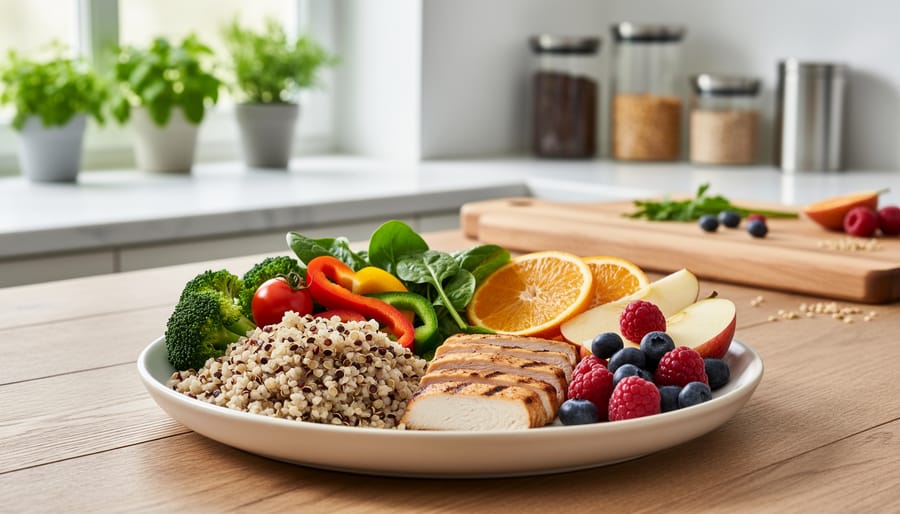
Healthy eating doesn’t require perfection or restrictive meal plans. Three simple strategies can transform your relationship with food: building balanced plates that satisfy hunger, planning flexible meals around your schedule, and creating sustainable habits that fit your life. These approaches work because they prioritize consistency over intensity, making them far more effective long-term than rigid diets that leave you counting calories or eliminating entire food groups.
If you’ve cycled through diet plans that promised results but left you feeling deprived, you’re not alone. Most people abandon strict eating regimens within weeks, not because they lack willpower, but because the rules clash with real life. The truth is that sustainable healthy eating comes from practical adjustments you can maintain through busy work weeks, social gatherings, and inevitable schedule changes.
The tips ahead focus on flexibility without sacrificing results. You’ll learn how to structure meals that keep you full and energized, how to prep food in ways that actually save time rather than add stress, and how to build habits that become automatic. No special ingredients required, no foods are off-limits, and you won’t need to overhaul your entire kitchen. Small, intentional changes to how you approach eating create lasting results that strict diets simply can’t match.
Why Flexibility Matters in Healthy Eating
Rigid diet rules create an all-or-nothing mindset that sets you up for failure. When a single cookie or unplanned meal feels like breaking the rules, many people abandon their efforts entirely rather than getting back on track. This black-and-white thinking turns eating into a source of stress instead of nourishment, making it nearly impossible to maintain healthy habits over time.
The psychological toll of restrictive dieting extends beyond guilt. Constantly monitoring forbidden foods demands mental energy that could be better spent on other aspects of your wellbeing. You might avoid social gatherings because the menu doesn’t fit your plan, or feel anxious about family dinners where traditional dishes don’t match your restrictions. This isolation and anxiety often do more harm than any single food choice ever could.
A flexible approach, on the other hand, acknowledges that nutrition happens over time, not in individual meals. It gives you room to honor your cultural heritage, celebrate special occasions, and adapt to unpredictable schedules without derailing your progress. When you can enjoy birthday cake at a celebration or try new foods while traveling, you’re building a sustainable relationship with eating rather than a temporary restriction you’ll eventually abandon.
This adaptability also means your eating pattern can shift with your changing needs. A busy week might call for simpler meals, while a relaxed weekend offers time for more elaborate cooking. Flexibility lets you maintain consistent health-supporting habits even as your circumstances change, which is exactly what long-term wellness requires.
1. Build Your Plate Around Whole Foods, Not Rules
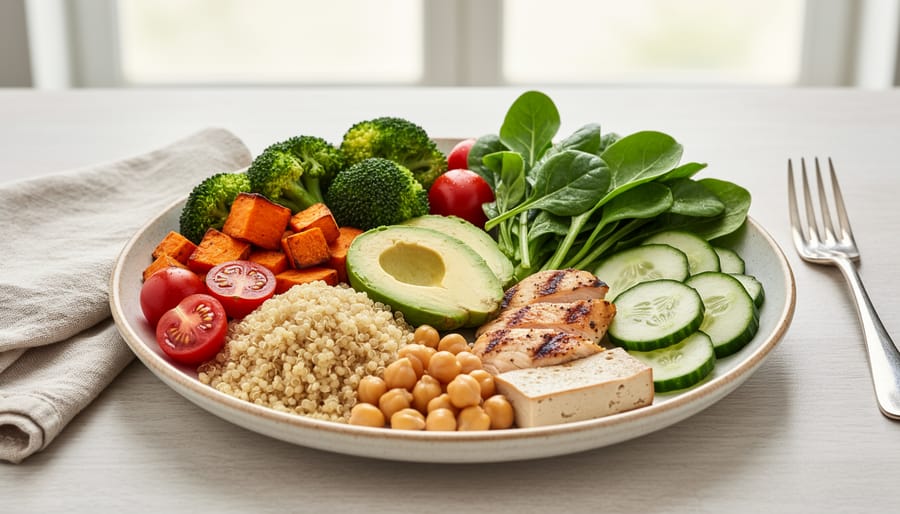
Start by asking yourself one simple question: What can I add to this meal? rather than What should I take away? This small shift in mindset is the foundation of building a plate around whole foods without getting tangled in restrictive rules.
Whole foods, vegetables, fruits, whole grains, lean proteins, and healthy fats, aren’t magical because they follow some rigid formula. They’re valuable because they deliver nutrients your body actually uses: fiber that keeps you satisfied, vitamins that support your energy, and minerals that help everything function smoothly. When you focus on adding these foods rather than banning others, you create space for sustainable habits that don’t feel like punishment.
Think about breakfast. Instead of stressing over whether your toast is “allowed,” consider what you could add to make it more satisfying. Maybe it’s mashed avocado for healthy fats, sliced tomato for extra vitamins, or a poached egg for protein. You haven’t eliminated anything, you’ve just built a more complete meal that will keep you energized longer.
Here are simple ways to add more whole foods to your meals without overhauling your entire diet:
- Toss a handful of spinach or kale into your morning smoothie or scrambled eggs
- Keep pre-cut vegetables in the fridge for easy additions to sandwiches, pasta, or grain bowls
- Swap half the pasta in your dish for roasted vegetables or use cauliflower rice alongside regular rice
- Add beans or lentils to soups, salads, or tacos for extra protein and fiber
- Keep frozen berries, edamame, or mixed vegetables on hand for quick nutrient boosts
This approach works because it’s additive, not restrictive. You’re not obsessing over what you can’t have, you’re simply crowding out less nutritious options by filling your plate with foods that make you feel good. Some days you’ll load up on vegetables and lean protein. Other days you’ll have pizza, and maybe you’ll add a side salad. Both scenarios honor the same principle: you’re thinking about addition, not deprivation.
The beauty of this strategy is that it adapts to your life. Traveling? Grab fruit and nuts at the airport instead of skipping food altogether. Eating out with friends? Choose a dish with vegetables you enjoy, then savor dessert if you want it. No rules broken, no guilt required, just consistent choices that support your wellbeing without turning every meal into a moral test.
2. Practice the 80/20 Balance
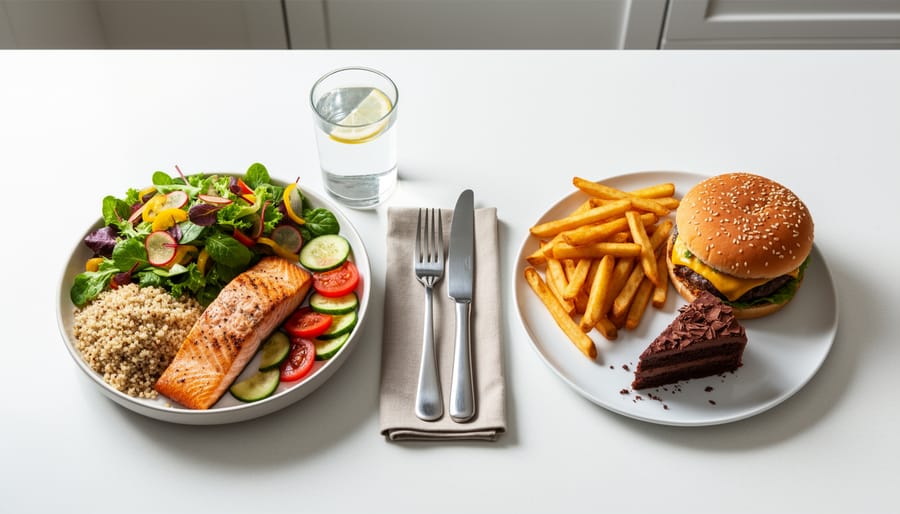
The 80/20 principle offers a practical framework that takes the pressure off every single meal. Instead of labeling foods as “good” or “bad,” this approach recognizes that what you eat most of the time matters more than occasional indulgences. When roughly 80% of your choices come from whole, nutrient-dense foods, the remaining 20% can include whatever brings you joy without derailing your health.
This framework works because it removes the all-or-nothing mentality that makes traditional diets so hard to maintain. You can enjoy birthday cake at a celebration, share pizza with friends, or savor your favorite comfort food without feeling like you’ve “ruined” your progress. That flexibility actually strengthens your relationship with food by eliminating guilt and the restrict-binge cycle that comes with overly rigid rules.
In daily life, this might mean filling your breakfast and lunch with nutrient-rich options like oatmeal with berries, grilled chicken salads, or veggie-packed stir-fries, then enjoying a slice of dessert after dinner without second-guessing yourself. Or it could look like preparing home-cooked meals with whole ingredients during the week while ordering takeout on Friday night. The specific foods matter less than the overall pattern.
This balance also supports your social life in ways strict diets never can. You won’t need to skip dinner with friends because the restaurant doesn’t fit your plan, or bring your own food to family gatherings. When most of your choices align with your health goals, sharing a meal that’s purely about enjoyment becomes part of a sustainable approach rather than a setback.
The beauty of 80/20 is its adaptability. Some weeks might lean closer to 90/10 if you’re feeling great with your routine. Other weeks, especially during holidays or travel, might shift toward 70/30. That natural ebb and flow is exactly what makes this approach work long-term.
3. Tune Into Your Body’s Signals

Your body already knows what it needs, the challenge is learning to listen. Most of us spend years ignoring hunger until it becomes urgent or eating past fullness because the clock says it’s mealtime. Tuning into your body’s signals means reconnecting with the internal cues that guide when, what, and how much to eat, creating a truly personalized approach that no diet plan can match.
Start by noticing your hunger on a scale from 1 to 10, where 1 is ravenous and 10 is uncomfortably stuffed. Ideally, you’ll eat when you’re around a 3 or 4 (genuinely hungry but not desperate) and stop around a 6 or 7 (satisfied but not overfull). This isn’t about perfection, some days you’ll miss the window, and that’s fine. The practice itself builds awareness over time.
Pay attention to how different foods affect your energy, mood, and concentration. A breakfast that leaves you alert and satisfied for hours works better for your body than one that triggers a crash by mid-morning, regardless of what any nutrition guideline says it should do. You might discover that you need more protein at breakfast, or that a lighter lunch helps you avoid the afternoon slump. These insights are yours alone.
Here are simple ways to build this skill without overcomplicating it:
- Pause halfway through a meal to check your fullness level
- Notice whether you’re eating from true hunger, boredom, stress, or habit
- Eat without screens for at least one meal a day to focus on the food and your body’s response
- Ask yourself “How do I feel an hour after eating this?” to identify what truly nourishes you
This awareness doesn’t develop overnight, and it’s not about analyzing every bite. It’s about gradually shifting from external rules to internal wisdom. When you eat slowly enough to notice fullness before you’re overstuffed, or recognize that you’re reaching for a snack out of stress rather than hunger, you gain information that helps you make choices aligned with what your body actually needs right now, not what worked yesterday or what a plan says you should want.
Common Questions About Flexible Eating
Can flexible eating really help me reach my health goals?
Yes. When you focus on adding nutrient-dense foods most of the time while allowing room for enjoyment, you’re more likely to stick with healthy patterns long-term. Consistency beats perfection, and sustainable habits produce better results than strict diets you can’t maintain.
How do I maintain some structure without being rigid?
Think of structure as helpful patterns, not hard rules. You might plan balanced meals for weekdays while staying open to spontaneous weekend brunches, or keep your kitchen stocked with nutritious staples while leaving room for cravings. Structure should support your life, not constrain it.
What if flexibility starts feeling like I’ve lost all control?
Flexibility isn’t the same as chaos. If you notice you’re regularly skipping meals, relying heavily on processed foods, or feeling physically unwell, use that as information rather than judgment. Gently guide yourself back to the patterns that serve you, remembering that one off day doesn’t erase your progress.
How do I handle social situations when I’m trying to eat healthily?
Flexible eating makes social situations easier, not harder. You can enjoy a restaurant meal or dinner party without stress because you’re not following strict food rules. Focus on the experience and company, make choices that feel balanced, and return to your usual patterns at your next meal.
The beauty of a flexible approach is that it adapts to you. Some days you’ll naturally gravitate toward salads and grilled chicken, while other days you’ll share pizza with friends. Both scenarios fit into healthy eating when you zoom out and look at your overall patterns rather than individual meals. Your body is remarkably good at balancing itself when you provide variety and listen to its signals over time.
Many people worry that without strict rules, they’ll make poor choices constantly. In practice, the opposite often happens. When no food is forbidden, the intense appeal of restriction-driven cravings fades. You might find yourself genuinely wanting vegetables more often simply because you’re not rebelling against diet rules. Trust builds gradually as you see that flexibility doesn’t derail your progress.
How We Chose This List
We selected these three healthy eating tips based on criteria that prioritize practical implementation over theoretical perfection. Each strategy needed to meet several key standards.
First, we looked for approaches supported by consistent patterns in nutrition research and clinical practice rather than trendy fads or extreme positions. The tips had to align with established principles of balanced nutrition while remaining accessible to people with varying levels of nutrition knowledge.
Second, we prioritized sustainability. Any strategy that requires constant willpower, expensive specialty foods, or complete lifestyle upheaval didn’t make the cut. These tips needed to work for busy parents, shift workers, budget-conscious shoppers, and anyone navigating real-world constraints.
Third, we emphasized psychological feasibility. Strategies that create guilt, anxiety, or all-or-nothing thinking contradict the flexible philosophy this article promotes. Each tip needed to reduce stress around food choices rather than amplify it.
Finally, we valued adaptability across different cultural backgrounds, dietary preferences, and health situations. These tips function whether you’re vegetarian, omnivorous, managing a health condition, or simply trying to feel better. They’re frameworks that bend to fit your life, not rigid prescriptions that demand you bend to fit them.
Healthy eating doesn’t have to mean following someone else’s rules perfectly. It’s about discovering what actually works for your body, your schedule, and your life. The three strategies we’ve covered, building meals around whole foods, embracing the 80/20 balance, and tuning into your body’s signals, aren’t rigid commandments. They’re flexible frameworks you can adapt and adjust as your needs change.
Start with whichever tip resonates most right now. Maybe you’re drawn to adding more whole foods without restriction. Perhaps the 80/20 approach feels like the permission you’ve been waiting for. Or you might be ready to reconnect with your body’s natural cues. Pick one, experiment with it for a few weeks, and notice what shifts.
The goal isn’t nutrition perfection. It’s building a sustainable relationship with food that supports both your health and your happiness. When you give yourself permission to be flexible, you create space for real, lasting change, the kind that fits your life instead of forcing you to fit someone else’s diet plan.