

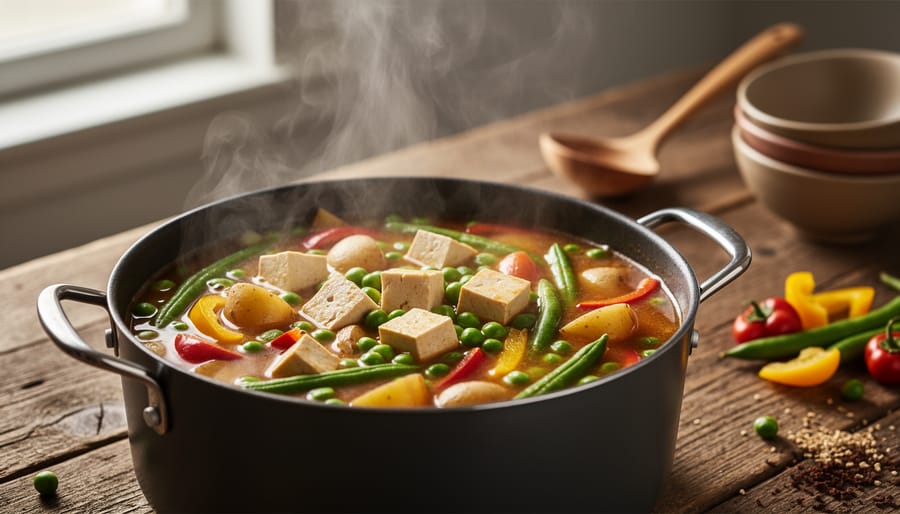
To make tofu stew at home, brown your aromatics, simmer vegetables in broth until tender, then add tofu near the end so it keeps its shape and soaks up flavor. Most versions come together in about 30 minutes, and the technique is forgiving enough for a confident beginner.
That’s the beauty of this dish. HelloFresh’s Homestead Tofu Stew, rated Medium difficulty, builds a creamy base from mirepoix, russet potato, green peas, and a spice blend, then pairs it with brown-butter smashed Irish champ. At the lighter end, an Indonesian tofu stew with spring vegetables marinates firm tofu in ginger, lime juice, and canola oil before simmering it with green beans, red bell pepper, zucchini, and light coconut milk. It serves 8, so it’s a natural for meal prep.
Then there’s the kimchi style, a tangy, warming option that Weight Watchers counts among its top tofu recipes.
Below, you’ll find the tools you need, a few kitchen safety reminders, and a numbered method you can adapt to any of these three styles.
Why Tofu Stew Fits a Balanced Plate
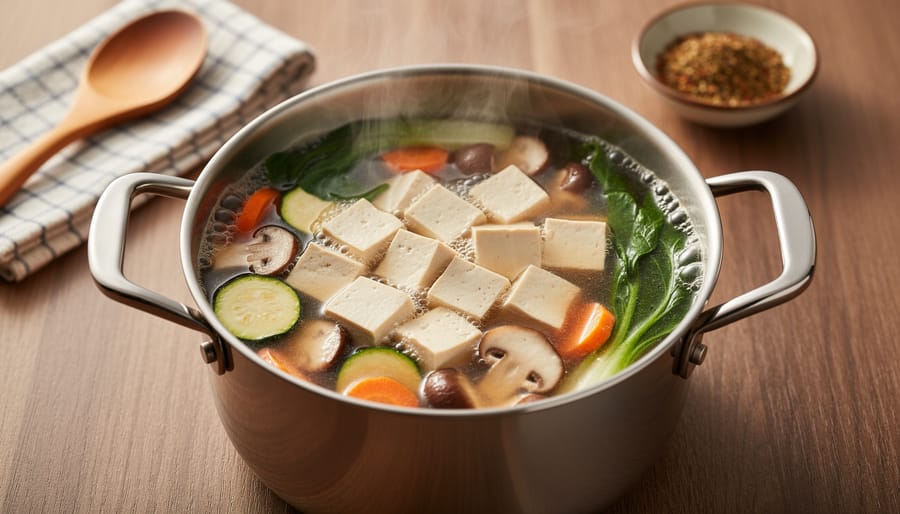
Tofu is a plant-based protein, and it works well in stews because it’s mild on its own. It takes on the flavor of whatever it simmers in, whether that’s a creamy broth, a coconut-milk base, or something tangy and spicy. It also pairs easily with vegetables, which is why recipes like the Indonesian-style stew lean on green beans, bell peppers, and zucchini.
That makes a tofu stew a natural fit for a balanced plate. You get protein, plenty of vegetables, and a warm broth in one pot. Serve it over steamed brown rice or quinoa, or alongside potatoes, and you’ve added a whole grain or a hearty starch without any extra fuss.
A quick word on texture, since it matters here. Firm tofu holds together well when cooked and is dense enough to slice or cube. Extra firm tofu has even less water, so it keeps its shape best through a long simmer. Both are good choices for stews, and the Indonesian-style recipe calls for either one.
If you’ve ever worried that a meatless dinner might feel thin, a good stew is a gentle way to prove otherwise.
What You’ll Need: Ingredients and Kitchen Tools for Tofu Stew
Choosing the Right Tofu
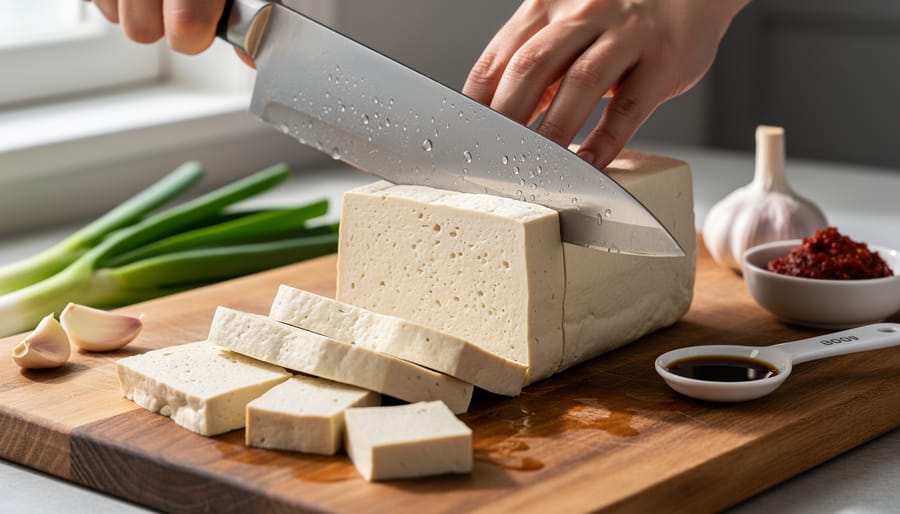
For stews, pick firm or extra-firm tofu. Both hold their shape while simmering instead of crumbling into the broth, which is why the Indonesian-style recipe calls for firm or extra-firm tofu. Softer varieties are better saved for smoother dishes.
Before cooking, gather these basics:
- Firm or extra-firm tofu
- Paper towels or a clean kitchen towel
- A plate and something flat, like a cutting board, to press with
- Your usual pantry staples such as broth and spices
To pat tofu dry, set the block on towels, cover with more towels, and press gently for about ten minutes. Drier tofu browns better and soaks up flavor more readily.
Before You Start: Food Safety and Kitchen Safety Notes
A pot of tofu stew is forgiving, and a few simple habits keep it that way. When you pour in broth or coconut milk, lower the liquid in slowly and keep your face back from the steam, since a sudden splash from a hot pot is the most common kitchen mishap with stews. Set your cutting board on a damp towel so it doesn’t slide while you slice tofu and vegetables.
Label reading matters too. Soy, dairy, and ingredients hiding in broth concentrates are the usual allergen culprits, so give each package a quick check. Broth choice can also change whether a stew is vegetarian or vegan, which is worth knowing if you follow vegetarian diets. The Indonesian-style recipe, for example, allows either vegetable or chicken broth, so the broth and ingredient notes are a handy reference. Kimchi-style stews may contain fish products, so check the kimchi label if you eat plant-based.
Once dinner is done, it helps to store leftovers safely by moving the stew to the fridge soon after serving, then reheating it until steaming hot.
How to Make Tofu Stew Step by Step
Simple Swaps and Flavor Tweaks
Once you have the base method down, small tweaks keep it fresh. Here is the sequence to build on:
- Prepare the tofu by pressing, cubing, or marinating it with ginger and lime juice.
- Cook the aromatics and base ingredients, such as onion, garlic, or a mirepoix, until softened.
- Add broth and simmer so the flavors come together.
- Add vegetables and cook until tender but not mushy.
- Garnish with green onion or fresh cilantro and serve.
From there, make it your own. Swap vegetables with the season: the Indonesian-style stew leans on green beans, bell pepper, and zucchini, but peas, potatoes, or whatever looks good at the market all work. For a vegan version, choose vegetable broth over chicken broth concentrate and skip the dairy. Want more heat? Add spices a pinch at a time and taste as you go. A splash of lime or other citrus stirred in right at the end brightens everything up. Start small, then adjust to your own taste.
Three Tofu Stew Recipe Styles to Try
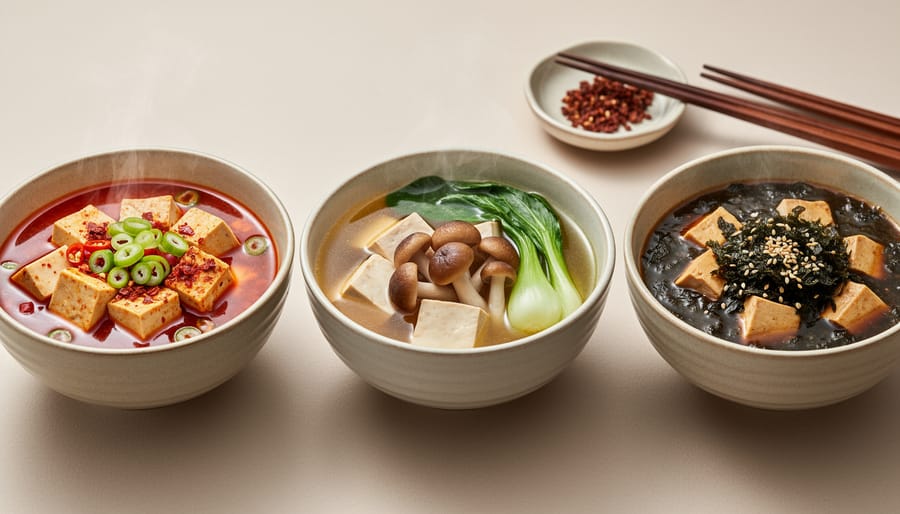
Creamy Homestyle Tofu Stew
If you want a cozy, comforting bowl, this is the one to start with. It’s based on HelloFresh’s Homestead Tofu Stew, which comes together in 30 minutes and is rated Medium difficulty. The ingredient list is short: tofu, mirepoix, green peas, russet potato, chicken broth concentrate, a cream sauce spice blend, green onion, unsalted butter, milk, salt, and pepper.
Follow the step-by-step method above: brown the tofu, soften the mirepoix, add the potato and broth, then finish with the peas, milk, and butter for that silky texture. It’s served with brown-butter smashed Irish champ, which makes it feel like a real sit-down dinner.
One thing to know: the chicken broth concentrate and dairy mean this isn’t vegan as written. If you’d like a plant-based version, check swaps like vegetable broth and a dairy-free milk. For extra creaminess, a vegan cashew sauce is worth trying, and if you prefer hands-off cooking, a tofu slow cooker approach can work too.
Indonesian-Inspired Tofu Stew with Spring Vegetables
This Indonesian-inspired version is the one to reach for when you want a lighter, brighter stew that feeds a crowd. It starts with firm or extra firm tofu marinated in fresh ginger, lime juice, and canola oil, which gives the cubes a zesty edge before they ever hit the pot.
The base builds on onion and garlic, then adds warming cumin, coriander, and cloves for gentle depth. Pour in sodium-reduced vegetable or chicken broth, then stir in light coconut milk for a soft, silky finish. Green beans, red bell pepper, and zucchini bring color and a fresh, spring-like bite. Finish with plenty of chopped cilantro.
Here’s why it works so well for planning ahead: the recipe serves 8, so one pot covers several meals. Ladle it over steamed brown rice or quinoa if you like, and portion leftovers into containers for easy lunches. Use the five-step method above and add the vegetables toward the end so they stay tender, not mushy.
Kimchi and Tofu Stew
Kimchi and Tofu Stew is a bright, bold take on the style. Weight Watchers includes it among its top tofu recipes, which says a lot about how well tofu plays with big flavors. Expect a tangy, spicy broth with the deep, savory funk that fermented kimchi brings.
You can build it with the same step-by-step method from earlier: prepare the tofu, start a flavorful base, simmer, add vegetables, then garnish and serve. The kimchi goes into the base so its flavor can bloom in the pot.
Because quantities matter for balancing heat and tang, follow a trusted recipe for exact amounts, and taste as you go.
How to Tell Your Stew Turned Out Right and What to Do Next
A quick taste-and-texture check tells you if your stew worked. The tofu should be heated through and still hold its shape when you press a cube with a spoon. Vegetables should be tender but not mushy. Then taste the broth: if it’s flat, add a pinch of salt; if it’s heavy, a squeeze of lime brightens it; if you want more kick, stir in a little spice.
For next steps, serve it over steamed brown rice or quinoa, as the Indonesian-style recipe suggests, or pair it with a hearty side like the smashed potatoes served with the homestyle version. Cool leftovers promptly, refrigerate them, and reheat until steaming hot. Next time, try a different style from the three above.
Can I make tofu stew vegan?
Yes, as long as you choose vegetable broth and skip dairy. Some recipes use chicken broth concentrate, milk, or butter, so swap those and check labels.
Do I need to press the tofu?
It helps. Patting it dry lets it brown and soak up flavor, but a thorough blot with a towel is enough for a stew.
What tofu holds up best in stew?
Firm or extra firm tofu keeps its shape while simmering, which is why the Indonesian-style recipe calls for it.
What can I serve with it?
Steamed brown rice or quinoa works well, as does a simple side of potatoes or greens.
Conclusion
Tofu stew is one of those recipes that forgives almost everything. You can go creamy and cozy like the Homestead style, bright and fragrant like the Indonesian version with spring vegetables, or tangy and bold with a kimchi-style pot. The same simple method works for all three, and the vegetables, broth, and spice level are yours to adjust.
So pick one style that fits what’s already in your kitchen and give it a try this week. Don’t worry about getting it perfect. A simmering pot, a block of tofu, and a handful of vegetables are all you need for a warm, plant-forward meal, and each time you make it, you’ll learn exactly how you like it.