

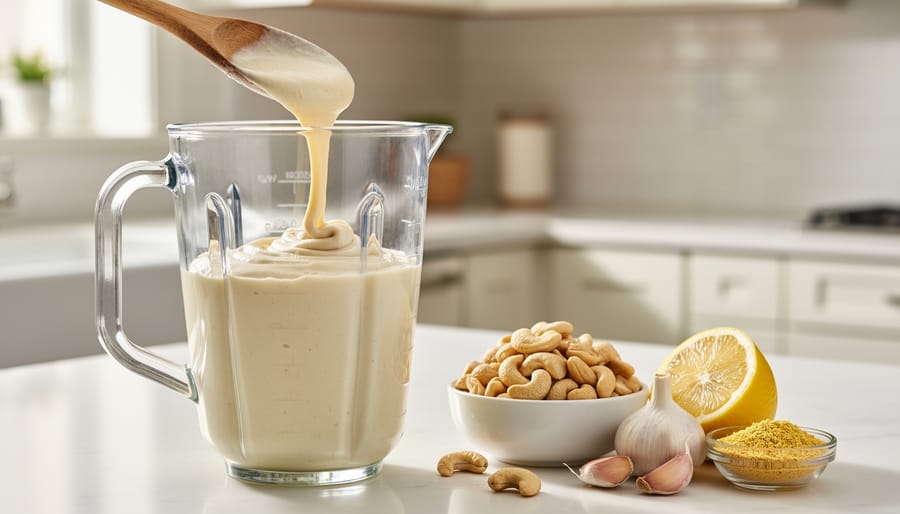
Vegan cashew cheese sauce takes about ten minutes of hands-on time and one tool: a blender. Soak raw cashews, blend them with a few simple pantry ingredients until silky, and you’ve got a creamy, cheesy sauce that’s dairy-free, gluten-free, and paleo-friendly. No cooking skills required.
Why does it work? Cashews are naturally mild and rich, so once softened and blended they turn smooth and creamy, much like a classic cheese sauce. Seasonings do the rest, giving you that savory, tangy flavor most of us miss when we skip dairy.
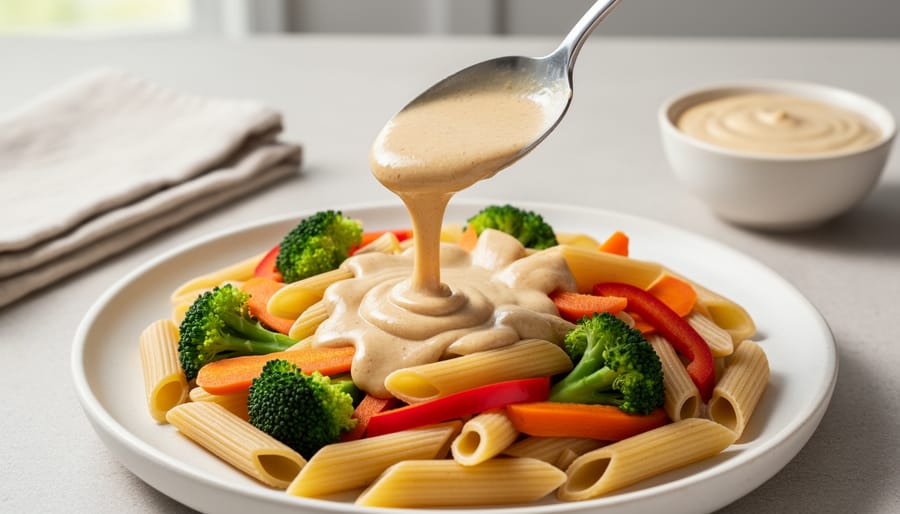
Maybe you’ve stood in front of a pot of plain pasta or a baked potato wishing for something saucy and satisfying. This is that something. It’s a handy staple for vegans, anyone avoiding dairy, and paleo eaters alike, and it’s remarkably versatile. Spoon it over pasta, pizza, risotto, potatoes, roasted vegetables, or burritos.
Below, you’ll find the tools and ingredients you need, an important allergy note, and a simple soak, blend, and use method, plus a quick way to check your results.
Why Vegan Cashew Cheese Sauce Is Worth Making at Home
Vegan cashew cheese sauce is a creamy, cheesy sauce made from cashews and a few other simple ingredients. It gets its richness from the nuts themselves, not from dairy, which is a big part of why so many home cooks are trying it right now.
Here’s a quick look at what makes it appealing:
- Dairy-free and vegan, so it works for plant-based plates.
- Gluten-free, which helps if you’re avoiding gluten.
- Paleo-friendly for those following that style of eating.
- Easy to make, with no special technique required.
- Blender-only, so there’s no stovetop or fancy gear involved.
- Versatile enough for pasta, pizzas, risottos, potatoes, vegetables, and burritos.
The sauce is often described as healthy, though it’s worth keeping that in perspective. Nutrition varies depending on the recipe and the ingredients you choose, so think of it as a flexible, whole-food-based option rather than a cure-all. If you’re exploring vegetarian diet types it’s also a handy way to bring a familiar, comforting flavour to the table without relying on dairy.
Then there’s the practical side. Picture a hectic Wednesday: you’ve worked late, everyone’s hungry, and the fridge has little more than some pasta and leftover roasted vegetables. A jar of cashew cheese sauce you blended on Sunday changes that evening completely. Warm it gently, toss it through, and dinner feels intentional instead of improvised. That make-ahead convenience is a quiet reason people keep it on hand.
What You’ll Need: Tools and Ingredients
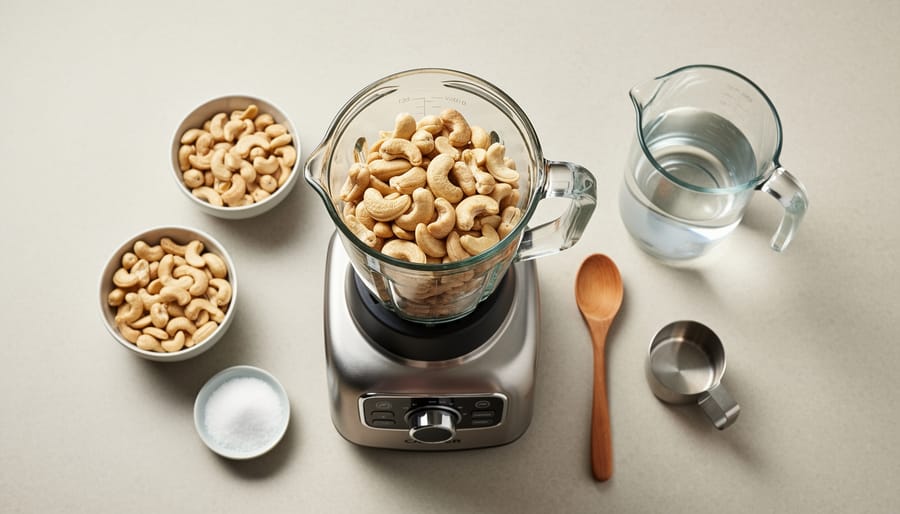
Good news: you don’t need much to make this sauce. A blender is the only essential appliance, and the ingredient list stays short. Before you start, gather these:
- A blender, which turns soaked cashews into a smooth, creamy sauce.
- Measuring cups and spoons, so you can start with a rough guide and fine-tune from there.
- A bowl for soaking the cashews until they soften.
- A clean storage jar for any leftovers.
- Cashews, the base that gives the sauce its rich, creamy body.
- An acid, like lemon juice or a splash of vinegar, for a bright tang.
- A savory element, like nutritional yeast, for that “cheesy” flavor.
- Liquid, such as water or plant milk, to thin the sauce to the consistency you like.
If nutritional yeast is new to you, it’s a deactivated yeast sold as yellow flakes or powder. It has a nutty, savory taste that many people use to give dairy-free dishes a cheesy edge. A little salt and garlic can round things out too.
Think of these as roles rather than rigid rules. If you like it tangier, add more acid. If you want it thicker for spooning, use less liquid. Keeping a few cashew-friendly staples on hand makes it easy to whip up a batch whenever the craving hits, and you can taste and adjust as you go until it feels like yours.
Before You Start: Safety Notes and Allergy Considerations
A few quick checks will keep your cashew cheese sauce safe and stress-free, and none of them take long.
If you’re cooking for guests, ask about allergies before you plan the menu. Cross-contact matters too, so wash blenders, spoons, and jars well if they’ve touched nuts and you’re serving someone who avoids them.
Hot water can speed up soaking, and that’s a perfectly fine route. Just handle it with care. Pour slowly, and don’t overfill the blender. When you blend anything warm, keep the lid vented and hold it down with a towel so steam can escape. If the blender feels too full or the liquid is very hot, stop, let it cool a bit, and blend in smaller batches.
The sauce itself is gluten-free, but packaged add-ins like seasoning blends or broths sometimes aren’t, so glance at labels if that matters to you. Once it’s made, spoon it into a clean jar and refrigerate it promptly. From there, you can taste and adjust with confidence.
How to Make Vegan Cashew Cheese Sauce, Step by Step
Step 1: Soak or Prepare the Cashews
Soaking is what turns hard, dense cashews into a sauce that blends silky instead of gritty. Water softens them, so your blender has far less work to do. You have two common options. A quick hot soak, where you cover the cashews in hot water for a short while, works well when you’re short on time. A longer cold soak, left in the fridge or on the counter, is hands-off if you plan ahead. Neither is a strict rule, so pick what suits your evening.
Here’s how the full process flows from here:
- Prepare or soak the cashews using a hot or cold soak.
- Drain them and add to the blender with the remaining ingredients.
- Blend until smooth, adding liquid gradually.
- Taste and adjust the seasoning and thickness.
- Warm gently or serve as is.
Once your cashews are softened, you’re ready to blend.
Step 2: Blend Until Silky
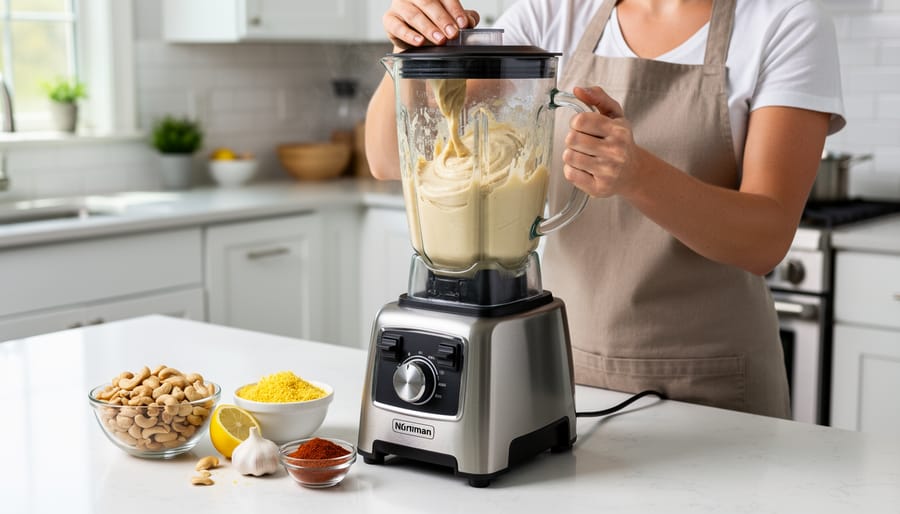
Add your soaked, drained cashews to the blender with the rest of your ingredients, then pour in just a splash of liquid to start. Beginning with less gives you control, since you can always thin the sauce later but can’t easily thicken it back up.
Blend on high, pausing to scrape down the sides so nothing hides under the blades. Keep going until the sauce looks glossy and smooth. If it’s too thick to move, add liquid a tablespoon at a time and blend again.
Grainy sauce usually just needs more time. Blend a little longer, scrape the sides, and check again. A tiny extra splash of liquid can help the blades catch every last bit of cashew.
Step 3: Taste, Adjust, and Serve
Once the sauce is smooth, grab a spoon and taste it. This is where it becomes yours. If it tastes flat, add a pinch more salt or a splash of lemon juice for tang. If it’s too sharp, a little more of the savory element mellows things out. For thickness, blend in a spoonful of liquid at a time until it’s pourable or spoonable, however you like it.
Then serve it as is for a cool, creamy drizzle, or warm it gently in a small pot over low heat, stirring until it’s just heated through.
Where to Use Your Cashew Cheese Sauce
Once your sauce is blended, the fun part begins. It’s a flexible sauce that works as a topping, a stir-in, or a finishing drizzle, so you can match the method to the dish. Here are a few easy ways to put it to work:
- Pasta: Toss warm noodles with a few spoonfuls until every strand is coated.
- Pizza: Drizzle it over the crust before or after baking for a creamy, cheesy finish.
- Risotto: Stir some in near the end of cooking for a richer, silkier texture.
- Baked or roasted potatoes: Spoon it over the top while they’re still hot.
- Steamed or roasted vegetables: Pour it over broccoli, cauliflower, or whatever’s in your fridge.
- Burritos: Spread a layer inside, or add a dollop on the side for dipping.
A simple rule of thumb: thicker sauce suits spooning and spreading, while a slightly thinner sauce is better for tossing and drizzling. If yours is too thick for a particular dish, thin it with a splash of water or plant milk and give it a quick stir.
Start with a small amount, taste, and add more as you go. The sauce is easy to make again, so you can experiment freely until you find the combinations your household loves most.
How to Tell It Turned Out Right and What to Try Next
You’ll know your vegan cashew cheese sauce turned out right when it looks smooth and glossy, with no visible bits of cashew. It should be creamy enough to pour or spoon, coat the back of a spoon, and taste pleasantly cheesy with a gentle tang. If a taste test makes you want a second spoonful, you’re in good shape.
If it falls short, most problems are easy to fix. Too thick? Blend in a splash of liquid at a time. Too thin? Add a few more soaked cashews and blend again. Tastes flat? Try a little more salt, a squeeze of something acidic, or a bit more of your savory “cheesy” ingredient, tasting after each tweak. Grainy? Keep blending, scrape down the sides, and give it a little more time, since a longer soak helps next round.
Once you’re happy with it, pour leftovers into a clean jar and keep them in the fridge, then check how it smells and looks before using it again. From there, play around. Stir in your favorite spices, or try it on something new, like roasted potatoes, a burrito, or a veggie-loaded pizza. Each batch teaches you a little more about the flavor you like best.
Vegan Cashew Cheese Sauce FAQs
Do I need a high-powered blender?
Not necessarily. Any blender can work, but a stronger one gets you smoother results faster. If yours is on the modest side, soak the cashews well and blend a little longer, scraping down the sides as you go.
Is cashew cheese sauce healthy?
It’s often described as a healthy option, since it’s made from whole-food ingredients and skips dairy. Nutrition depends on what you add and how much you use, so think of it as part of a balanced plate rather than a cure-all.
Is it gluten-free and paleo-friendly?
The sauce is described as both gluten-free and paleo-friendly, as well as vegan and dairy-free. If you’re strict about gluten, glance at the labels on any packaged add-ins.
Can I make it without soaking the cashews?
You can try, but soaking softens the nuts and helps the sauce blend silky instead of grainy. If you skip it, plan on extra blending time and a bit more liquid.
As for what to pour it on, pasta, pizzas, risottos, potatoes, vegetables, and burritos are all great starting points. If you’re curious about separating fact from hype in plant-based eating, it’s worth reading up on common nutrition myths so you can enjoy your creamy new sauce with confidence.
Vegan cashew cheese sauce is one of those kitchen wins that feels fancier than it is. A blender, some cashews, and a few simple ingredients get you a creamy, dairy-free sauce you can pour over almost anything.
So start small. Make a modest batch, taste as you go, and nudge the tang, salt, or thickness until it feels like yours. There’s no wrong version, only the one you’ll want to make again.
Then put it to work. Spoon it over pasta, drizzle it on roasted potatoes, tuck it into a burrito, or smooth it across a pizza. Pick a favorite dish this week and give it a cheesy upgrade. You might be surprised how quickly this sauce becomes a regular in your kitchen.