


Third-party testing means an independent lab, one with no stake in the sale, checks a peptide batch and reports what’s actually in the vial. For researchers buying peptides Canada suppliers offer, that report is the clearest proof of identity and purity you can get before a compound enters your workflow.
Picture a graduate student who spends weeks on an experiment, only to wonder whether an inconsistent result came from the method or from the material itself. Verified testing removes that doubt. A proper certificate of analysis typically shows the compound’s identity, its purity percentage, and the batch number it applies to.
Not every report carries equal weight, though. Who ran the test, how recent it is, and whether it matches your specific batch all matter.
This guide walks through what third-party testing involves, which standards and rules apply in Canada, what you can reasonably expect from a supplier, and where to find help. You’ll also get a practical walkthrough for reading a lab report with confidence. Peptides are sold for research use only, so for any health question, talk with a qualified healthcare professional and check official Canadian sources.
What Third-Party Testing for Peptides Actually Is

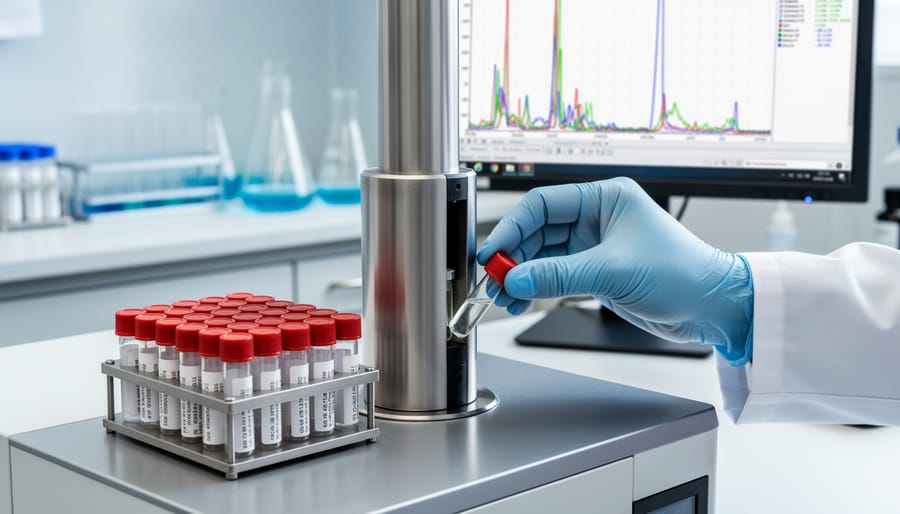
The Common Tests Behind a Lab Report
A third-party lab report usually bundles a few core tests, and each answers a different question. Think of them as separate checkpoints rather than one big “pass.”
The two you’ll see most often are HPLC and mass spectrometry. HPLC (high-performance liquid chromatography) separates a sample into its parts so a lab can estimate how much of it is the target peptide versus other material. Mass spectrometry measures molecular weight, which helps confirm the compound is actually what the label says. Together they speak to purity and identity, two things a supplier’s own marketing can’t prove on its own. If you’re new to reading these documents, a plain-language guide like this Health Canada warning on unauthorized peptides resource can help you see how the pieces fit on a typical certificate.
Some reports add optional checks. Endotoxin testing looks for bacterial fragments that can cause problems in biological work. Residual solvent and heavy metal screening looks for leftovers from manufacturing or trace contaminants.
| Test | What It Checks | Why Researchers Care |
|---|---|---|
| HPLC purity | How much of the sample is the target peptide | Impurities can skew results |
| Mass spectrometry | Molecular weight of the compound | Confirms identity matches the label |
| Endotoxin testing | Bacterial fragments in the sample | Contamination can interfere with experiments |
| Heavy metals / residual solvents | Trace metals and manufacturing leftovers | Flags quality-control gaps |
A good report will tell you which of these were run. Not every lab does every test, and that’s worth noticing. It’s a bit like sorting out nutrition myths: the details behind a claim matter more than the claim itself.
Why Canadian Researchers Ask for Independent Verification
Picture a small university lab running the same experiment week after week. Same protocol, same equipment, same careful notes. Yet the results kept shifting from one batch of peptide material to the next. After weeks of troubleshooting their technique, the team finally started asking suppliers for independent lab reports. The problem wasn’t their method. The material itself wasn’t consistent.
Stories like this are why independent verification comes up so often among Canadian researchers. The online peptide market is largely unregulated, and quality can vary a great deal from one seller to another, and even from one batch to another. A label might say one thing while the vial contains something different: a lower amount than listed, a different purity, or unexpected residues from manufacturing.
Reproducibility is the heart of good research. If you can’t be sure what’s in the sample, you can’t trust what the results mean, and neither can anyone trying to repeat your work. An outside lab with no stake in the sale offers a check that a supplier’s own paperwork can’t provide.
There’s also a practical reality worth knowing. Many peptide products sold for “research use only” aren’t approved for human use in Canada, and that labeling doesn’t change their status. Independent testing confirms what a material is, not whether it’s appropriate or safe for people. For personal health questions, a pharmacist or physician is the right place to start.
Asking for that outside verification is simply a way of replacing assumptions with evidence, a habit that serves any researcher well.
How Canadian Rules Shape the Conversation: Who Qualifies and What Applies
In Canada, Health Canada is the federal body that oversees health products, and that oversight shapes why verification matters so much. Many peptides sold for human use are treated as prescription drugs or as unauthorized products, depending on the compound and how it’s marketed. That means a bottle showing up online isn’t automatically cleared for people, no matter how polished the website looks.
This is where the phrase “for research use only” gets misunderstood. It’s a labeling statement from the seller. It doesn’t mean Health Canada has reviewed the product, and it doesn’t make the contents safe or appropriate for anyone to take.
So who actually uses research-grade materials? Generally, it’s qualified researchers working within institutions, universities, or licensed laboratories, usually under oversight like research ethics or compliance offices. These settings have processes for sourcing, documenting, and handling materials. An everyday consumer buying a vial for personal use sits in a very different category, and the rules that apply to the two situations aren’t the same.
That distinction is exactly why independent testing comes up. When materials go into legitimate research, the identity and purity of what’s in the vial need to be something you can document, not just something you’re told.
A quick caution: this section offers a general picture, not legal advice, and rules change over time. Details about classification, import, and who can legally obtain or use a given compound can shift. Before making any decision, check current requirements directly with Health Canada, or with your institution’s compliance or research office if you work within one.
Your Rights and Responsibilities When Buying or Handling Tested Materials
Buying tested materials is a two-way relationship. You can ask a good deal of your supplier, and you also carry some responsibilities of your own. Knowing both sides makes the whole process smoother.
Here’s what a researcher can reasonably expect from a supplier:
- Batch-specific reports that match the lot number on your product
- Clear labeling that names the compound and states it is for research use
- Transparent supplier details, including a real business address and contact information
- Straight answers when you ask about the testing lab or the methods used
If a supplier welcomes your questions, that’s usually a good sign. If they dodge them, that tells you something too.
On your side of the table, a few habits go a long way:
- Follow your institution’s policies and any federal or provincial requirements that apply to your work
- Store and handle materials as the supplier and your lab protocols describe
- Keep records of batch numbers, reports, and purchase dates so your work stays traceable
- Describe research materials accurately, never as products intended for human use
- Report problems or adverse issues through the proper channels, such as your compliance office
Think of record keeping as a gift to your future self. Months from now, when someone asks which batch produced a particular result, you’ll have the answer on hand rather than a guess.
Rules can differ between institutions and change over time, so your research compliance office is a good first stop whenever you’re unsure about what applies to you.
How to Read a Third-Party Test Report With Confidence
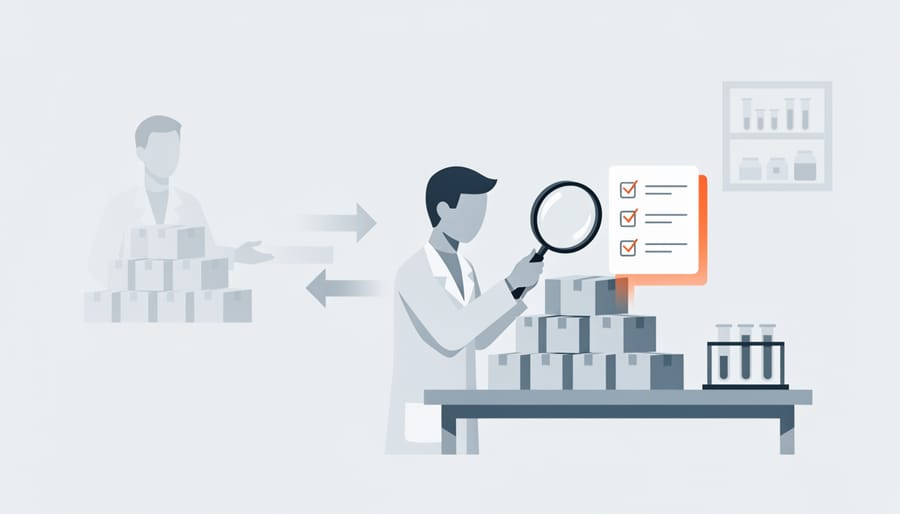
A third-party report can look intimidating at first glance, but a handful of checks cover most of what matters. Think of it as reading a nutrition label: you don’t need a chemistry degree, just a sense of where to look.
Start with the lab itself. A credible report names the independent laboratory and gives real contact details, such as an address, phone number, or website. If you can’t tell who ran the test, that’s your first question to ask.
Next, match the paperwork to the product in your hands. The batch or lot number on the report should be identical to the one on the vial or package. A report that carries no batch number, or a generic one that could apply to any shipment, tells you very little about what you actually received. Check the test date too, since a very old report may not reflect the current batch.
Then look at the substance details. The compound name should match what the product claims to be. You’ll usually see a purity percentage along with the method used, commonly HPLC, and an identity confirmation, often by mass spectrometry. A purity number with no stated method is worth a follow-up.
A few things deserve extra questions: reports that look edited, with mismatched fonts or odd spacing, missing lab details, or one document reused across several products.
The most encouraging step is also the simplest. Contact the lab directly, using details you found independently rather than only those printed on the report, and ask whether they issued it. Labs are generally happy to confirm. A quick verification call turns a piece of paper into something you can genuinely trust.
Where to Get Help and Reliable Information
Once you understand what a report shows, the next step is knowing who can answer the questions it raises. A few trustworthy places to start:
– Health Canada is the right source for regulatory questions about health products, including how a given peptide is classified and what rules apply.
– Your institution’s research ethics and compliance office can explain what’s required before you purchase or handle research materials.
– Accredited analytical laboratories can confirm what a specific test method does and doesn’t measure, and many will answer questions about their own reports.
– A pharmacist or physician is the person to ask about anything involving personal health.
For everyday wellness, the site’s food-first approach still applies. A registered dietitian can help you build nutrition habits grounded in evidence rather than in unverified products. If you’re ever unsure which of these fits your question, it’s worth knowing how to talk to a professional and what credentials to look for.
Does a lab report mean a product is safe?
No. A report shows what a specific sample contained on a specific date, such as purity and identity. It doesn’t establish that a product is safe for people.
Does testing make a research peptide approved for people?
No. Independent testing verifies quality, not legal status. A product sold for research use isn’t approved for human use because it has a clean report.
How do I know a report is real?
Check that the batch number matches your product, then contact the named lab directly to confirm it issued the report. Missing lab details or generic, batch-less documents deserve extra questions.
Who can I ask if I’m unsure?
For regulatory questions, start with Health Canada or your institution’s compliance office. For anything about your own health, ask a pharmacist or physician.
Reports also aren’t permanent. Because each one reflects a single batch at a single point in time, a new batch calls for a new report, and it’s reasonable to ask a supplier how recently testing was done.
Independent testing gives Canadian researchers something a label never can: outside confirmation of what’s actually in the vial. Verified identity, clear purity data, and batch-specific reports all support results that other people can repeat, and that’s the heart of good science.
Still, a report is only one piece of the picture. For regulatory questions, check with Health Canada and your institution’s compliance office. For anything about your own health, talk with a pharmacist, physician, or registered dietitian.
If you’re curious about the bigger conversation, our look at peptide blends and wellness offers a grounded read. We also take a measured approach to everyday questions, like caffeine: is it good or bad? Through it all, whole foods and balanced habits stay the foundation.